
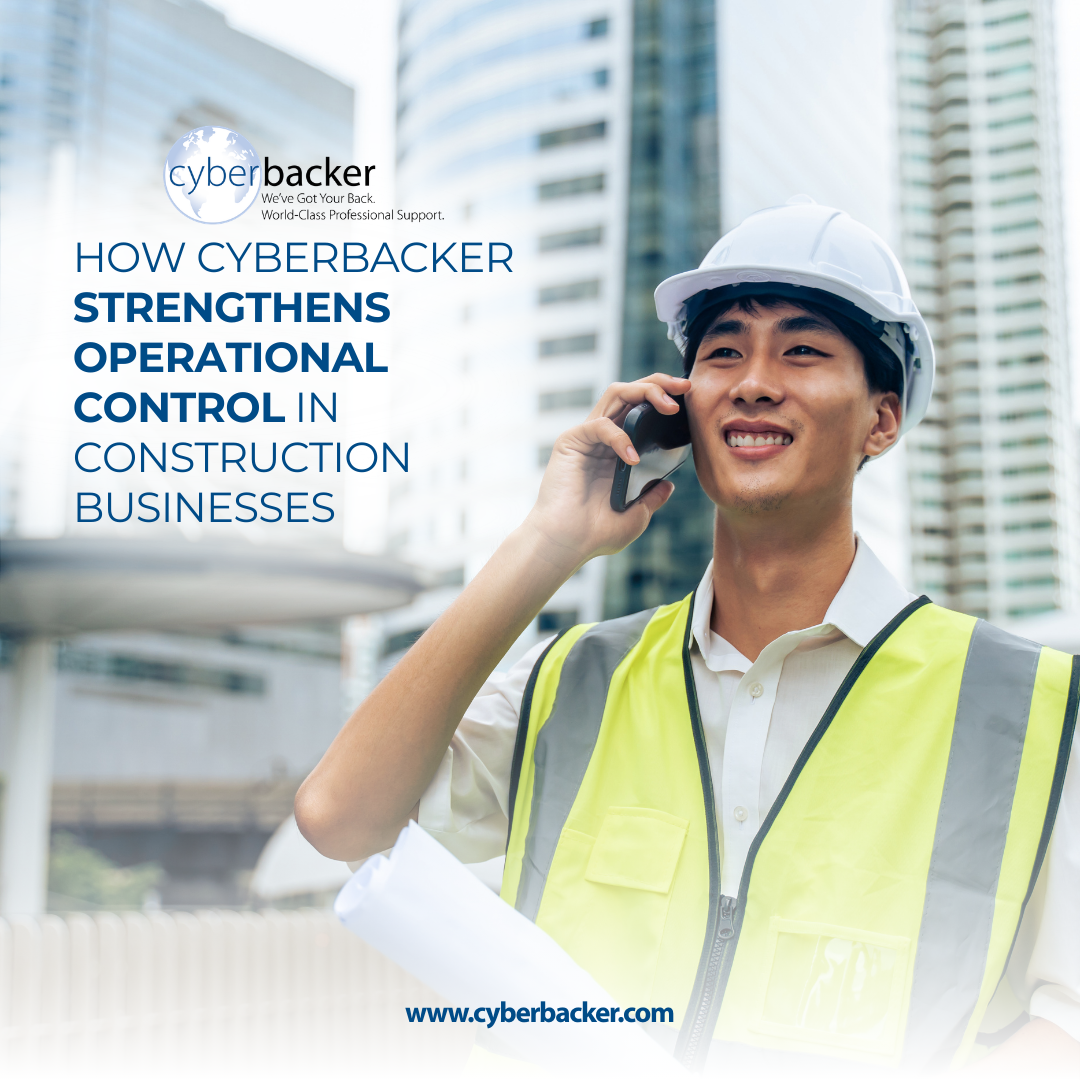
Construction is measured on-site, but performance is protected off-site. The difference is in how well schedules, documentation, vendor follow-ups, and project updates are coordinated across active builds. When those workflows are inconsistent, teams lose visibility and spend time recovering instead of progressing.
Large construction projects typically take 20 percent longer to finish than scheduled and are up to 80 percent over budget. While many factors contribute to these outcomes, operational inefficiencies, fragmented communication, and coordination overload remain consistent challenges across the industry.
For contractors, builders, and construction leaders focused on scaling responsibly, coordination discipline matters. That is where Cyberbacker steps in.
Where Coordination Breaks Under Growth
Construction businesses manage multiple moving parts at once:
- Active project timelines
- Subcontractor and vendor relationships
- Documentation and compliance tracking
- Estimating and cost revisions
- Client communication and project updates
- Reporting and internal oversight
As job volume increases, these responsibilities compound. When roles are unclear or coordination responsibilities compete with leadership priorities, execution becomes reactive instead of controlled. As the coordination load increases, teams spend more time chasing updates than driving progress.
The U.S. construction industry contributes more than $2 trillion annually to the economy. With that level of economic impact, operational discipline becomes a competitive advantage.
Construction leaders need reliable systems and consistent support to protect project timelines and client experience.
Role-Aligned Support Inside Your Construction Systems
Cyberbacker provides world-class professional support through highly trained remote partners who integrate seamlessly into your construction business.
Our remote professionals are aligned with your systems, processes, and operational goals. Rather than replacing your structure, they strengthen it.
Support areas include:
- Project coordination
- Documentation management
- Schedule tracking
- Vendor communication
- Estimating support
Every construction operation runs differently. That is why role alignment matters.
Cyberbacker does not provide generic support. We work to understand your operational structure first, then match you with a remote professional who fits your workflow, communication standards, and expectations.
This alignment is part of what we call the Seamless Backer Advantage.
The Seamless Backer Advantage
In construction, delays often occur when information is scattered or when responsibilities overlap. Clear ownership reduces friction.
The Seamless Backer Advantage is built around three principles:
- Structured role alignment
- Clear communication standards
- Ongoing partnership support
Your remote professional support integrates into your systems, tools, and reporting processes. They do not operate in isolation. They operate as an extension of your team.
For construction leaders, this means:
- More predictable coordination
- Reduced workflow bottlenecks
- Better documentation consistency
- Clearer internal communication
With clear ownership and consistent tracking in place, construction leaders regain the capacity to focus on client relationships, expansion planning, and high-level project oversight.
Maintaining Structure as Projects Multiply
Growth in construction often brings an important question:
How do you increase capacity without weakening your structure?
Workforce constraints add real pressure. Labor shortages continue to affect project timelines, budgets, and productivity, creating strain for construction teams trying to deliver consistently.
But field capacity is only part of the equation. Coordination capacity matters, too.
When leadership is pulled into schedule updates, vendor follow-ups, and documentation tracking, strategic oversight becomes fragmented. Cyberbacker helps construction leaders protect their focus by reinforcing operational coordination with a trained remote professional.
With structured workflow support in place, you gain clearer visibility, stronger follow-through, and more room for decision-making, client strategy, and business development without losing control of the details.
The goal is simple: keep coordination tight so construction leaders can focus on decisions instead of chasing updates.
What Structured Coordination Improves Day to Day
Construction projects rely on precise timing, accurate documentation, and consistent follow-through. Even small breakdowns in coordination can create delays that ripple across multiple active builds.
With consistent coordination in place, operations become more predictable. Timelines are easier to monitor. Documentation is easier to track. Communication gaps are reduced. Leaders gain a clearer view of what is progressing and what needs attention.
Remote professionals operate within your systems and reporting standards, reinforcing consistency across workflows so projects move forward with greater control and fewer coordination gaps.
A More Controlled Way to Scale
As project volume grows, operational control depends on how consistently coordination is managed behind the scenes.
For contractors and builders who want structured growth without operational overload, the right remote professional can make a measurable difference.
We begin with a Free Business Evaluation Call to understand your workflow, coordination challenges, and operational priorities before matching you with a role-aligned remote partner.
If your construction business is preparing for its next phase of growth, this first step offers clarity on where structured coordination would have the greatest impact.